Posts Tagged ‘mac’

Introducing Synaesthesia…

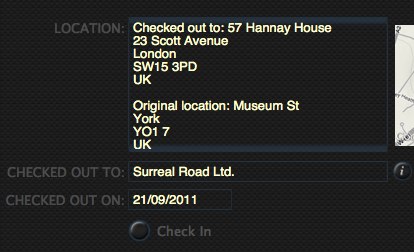
Synaesthesia is the new software product by Surreal Road. It’s been in development for around four years now, and is almost at a point where it is production-ready.

But what is it?

Having worked on all sorts of film and TV productions in different capacities (of greatly varying budgets), it often amazed me how “disconnected” every role seems. This is especially true in areas like post-production, where people employed to enhance or otherwise change particular shots would do so without any knowledge of the history of that shot. It might be possible to find out the camera and lighting setup used for a particular shot in some cases, but what about the intent behind that setup? What was the cinematographer aiming for, and how can I better enhance that, as opposed to the more usual practices of (at best) attempting to reverse-engineer a shot in order to understand it, or (at worst) changing things in a more haphazard manner until something looks good.

This was a problem I’ve encountered on almost every production, and in part it’s unavoidable. The reality is that just as the writers are often left outside the gates of production, so too are the production crew long-gone when it comes to post. This also becomes a practical and logistical problem. Where is a particular reel of film? What was the time and date of a particular shot? On a very organised production, it is likely that the editor would be armed with most of this information, but in all other cases, there is simply no one around to ask.

I look at software created for the visual effects industry, and it is staggering: the functionality and capabilities of VFX software is advanced to the point where it’s possible to use these tools to quickly create shots that are indistinguishable from reality. But when it comes to the actual production process, we’re in a technological drought. Even popular writing software, such as Final Draft, is only slightly more useable than TextEdit, even with years of industry experience and development put into it. What was I supposed to use in my capacity as data manager on various things to stay on top of everything? Excel?

The solution of course, is that (those computer-savvy enough) people tend to cobble together some sort of database (usually in the ubiquitous FileMaker Pro) which serves the immediate needs of the production. Much of the time this works out rather well, the production ends up with a bespoke system that covers most of the bases, something “good enough”. But what about those people who haven’t the time or the resources to create something from scratch, or those people who just want to hit the ground running? Well, you are who Synaesthesia was designed for.

At its core, Synaesthesia is about keeping track of things about a production, from start to finish. Here’s a typical scenario:

  1. You have a production. You add notes, storyboards, descriptions of characters, of sets, all to get a sense of what it’s about.
  2. At some point you have a screenplay. You import that and it links all the scenes with sets and characters you’ve previously created, and adds anything that’s missing.
  3. You refine the script, importing new versions as you go along, further fleshing out what you want to shoot and so on.
  4. You create a database of people and equipment  you’re going to need, and assign them to different parts of the production.
  5. You start shooting. You log what’s shot as it happens, along with notes, things like whether the take was good or not, what was recorded and making last-minute script updates.
  6. You import data directly from digital footage (such as RED camera footage), in order to accurately log timecodes, and shooting parameters.
  7. You start editing, having access to all your previous notes for each clip of footage that was shot. You can import sequences from an editing system and have Synaesthesia tell you which shot is used where. You can make changes to the edit from within Synaesthesia, and save those back to your editing system.
  8. You can designate certain shots as needing effects work, and update those shots as new effects versions are completed.
  9. Finally you can archive all the reels of footage, noting their locations, in case they’re ever needed again.

That’s quite a broad overview, and it assumes you’re going to use Synaesthesia from start to finish. But perhaps the best part of it is that you don’t have to. Maybe you’re only concerned with pre-production, and just want a place to keep storyboards, concept art, and screenplay versions organised? Maybe you just want to log continuity during a shoot? Or maybe you just want to tweak a couple of edits? Well then, Synaesthesia can help you.

It’s probably also helpful to mention what Synaesthesia (at least, in its current form) isn’t for:

  • It’s not for budgeting or scheduling
  • It’s not a replacement for software such as Final Draft
  • It’s not a replacement for systems such as Final Cut Studio
  • It’s not a server-based system, (it’s not possible for multiple people to make changes to the data at the same time).

A more detailed list of features is available  here. As I’ve said, Synaesthesia isn’t quite finished yet. It’s capabilities are still being worked out. But there are several key principles that we’ll always try to adhere to:

  • It will be simple to use
  • It will integrate with software you already use
  • It will give you the information you need

But more than anything else, I want it to be for whatever you (the user) need. With that in mind, we will be inviting people to try out pre-release versions in order to tell us what you like, what you don’t, and what’s missing. You can sign up for an invitation here.

Snow Leopard to change default gamma…

From the release notes of the beta of Mac OS 10.6 (“Snow Leopard”):

Default Gamma Changes

To better meet the needs of digital content producers and consumers, the default display gamma has been changed from 1.8 to 2.2 in Snow Leopard.

This will be a welcome change to anyone who has run into cross-platform issues with gamma.

Posted: January 20th, 2009
Categories: News
Tags: , , ,
Comments: No comments

File List for Mac…

Peter Maurer’s File List… makes renaming large numbers of files (like, oh, DPX sequences for instance) a snap.

File List

Drag in some files or folders into the main window and set the type of operation to perform. There are a lot of presets available, like renaming extensions, renumbering, or doing search-and-replace type stuff. Those of you who are so inclined can use scripting to do more advanced stuff…

I’ve been just using OSX’s Automator for this type of thing until now, but this is much faster and more intuitive.

It’s free to use, and donate if you like it.

Posted: February 7th, 2008
Categories: Tools
Tags: ,
Comments: No comments

Run 3DS MAX 2008 on a Mac…

The latest version of Parallels Desktop for Mac runs 3D Studio Max 2008 in OS X.5 (Leopard), seemingly without any problems (well no additional problems that the two products don’t have independently). It also works in Parallels “Coherence” mode, so you get a seamless experience, for example dragging and dropping files from the Finder into the 3DS Max interface.

max-parallels

The catch? DirectX rendering doesn’t seem to work, so you’ll have to use software rendering for the viewports.

Posted: January 30th, 2008
Categories: Tips & Tricks
Tags: , , ,
Comments: No comments

Combustion Alive After All…

I’d previously written off Autodesk’s Combustion as being dead in the water, with seemingly no development having taken place for a long time, and a seemingly endless list of bugs (on the Mac version at least). Today however, Autodesk announced Combustion 2008 for Windows and Mac (with a whole slew of features), so maybe there’s still competition for After Effects.

The popular Colour Warper tool, found in the Autodesk Flame visual effects system, has been added to Combustion 2008. The new release also includes improvements to the schematic view.

The Colour Warper in Combustion 2008 performs primary and selective colour correction. It also allows for precise fine-tuning with multiple levels of adjustment in a single pass. Colour Warper features include:

·         Interactive adjustment of gamma, gain, offset, hue, saturation, and contrast

·         Intuitive hue shift and a tint colour wheel for fast, accurate colour balancing and a visual colour sampling palette for precise colour matching

·         Interactive Histogram and curves editing modes for subtle, precision tweaking of colour components

·         Independent controls for colour correcting the image’s shadow, midtone, and highlight regions

·         “Match” feature for fast scene-to-scene colour correction

·         “Selective” feature for sampling up to three different colour regions for isolated correction

·         User interface features: high-quality RGB vector scope, and a 3D histogram for precise colour monitoring

Pricing and Availability

Autodesk anticipates that Combustion 2008 will be available in December 2007. The 2008 release will be supported on Macintosh and Windows operating systems. Autodesk suggested retail pricing is £850 or EUR 1,200*. The suggested upgrade price from Combustion 4 to Combustion 2008 is £165 or EUR 235*.

Posted: November 29th, 2007
Categories: Tools
Tags: , , ,
Comments: No comments